Like many of us hitting our 40s and 50s, I had a friend come to me when he was reviewing his life insurance purely as a safety net for his wife and kids after he was gone. He saw it as a completely passive document, something that would only ever matter when he was no longer around to see it work. He had absolutely no idea his policy could actually step in and help him while he was still here.
When you or someone you love gets a terminal diagnosis, time stops. The emotional weight is unimaginable. But the everyday bills do not stop. The stress of mortgages, school fees, utility bills, and sudden out-of-pocket medical costs can make an already heartbreaking situation feel entirely impossible. For families who have worked hard to build a life, the thought of losing the family home or draining the savings account adds a layer of anxiety that nobody needs during their final months or years.
This is exactly where a terminal illness benefit steps in. It is a built-in feature of most modern life insurance policies that lets you tap into your payout early. Instead of leaving your family to wait for a death benefit, this feature provides immediate financial support while you are living. Here is a grounded, detailed look at how terminal illness claims actually work in Australia, how they interact with your other covers, and what you need to know about unlocking these funds.
What Exactly is a Terminal Illness Benefit?
Standard life insurance pays a lump sum to your nominated beneficiaries or your estate when you pass away. A terminal illness benefit does something entirely different. It acts as an early release of your standard death cover.
Getting these funds will reduce or completely cancel your linked death cover by whatever amount is paid out to you. If your policy includes Total and Permanent Disability (TPD) cover, taking a terminal illness payout will generally wipe out that TPD balance as well, because the covers are usually linked together in a single pool of funds.
The primary goal of this benefit is to give you choices and breathing room. It is designed to remove financial panic so you can focus entirely on your health, your comfort, and the people you care about. If you want a quick refresher on how all these different policy types fit together in a broader financial plan, have a read through our main life insurance guide.
The 24-Month Rule and Medical Requirements
Getting a terminal illness claim approved relies heavily on specific medical timeframes and certifications. I know that talking about life expectancy in terms of months is incredibly heavy, but understanding the rules up front helps remove the administrative guesswork later.
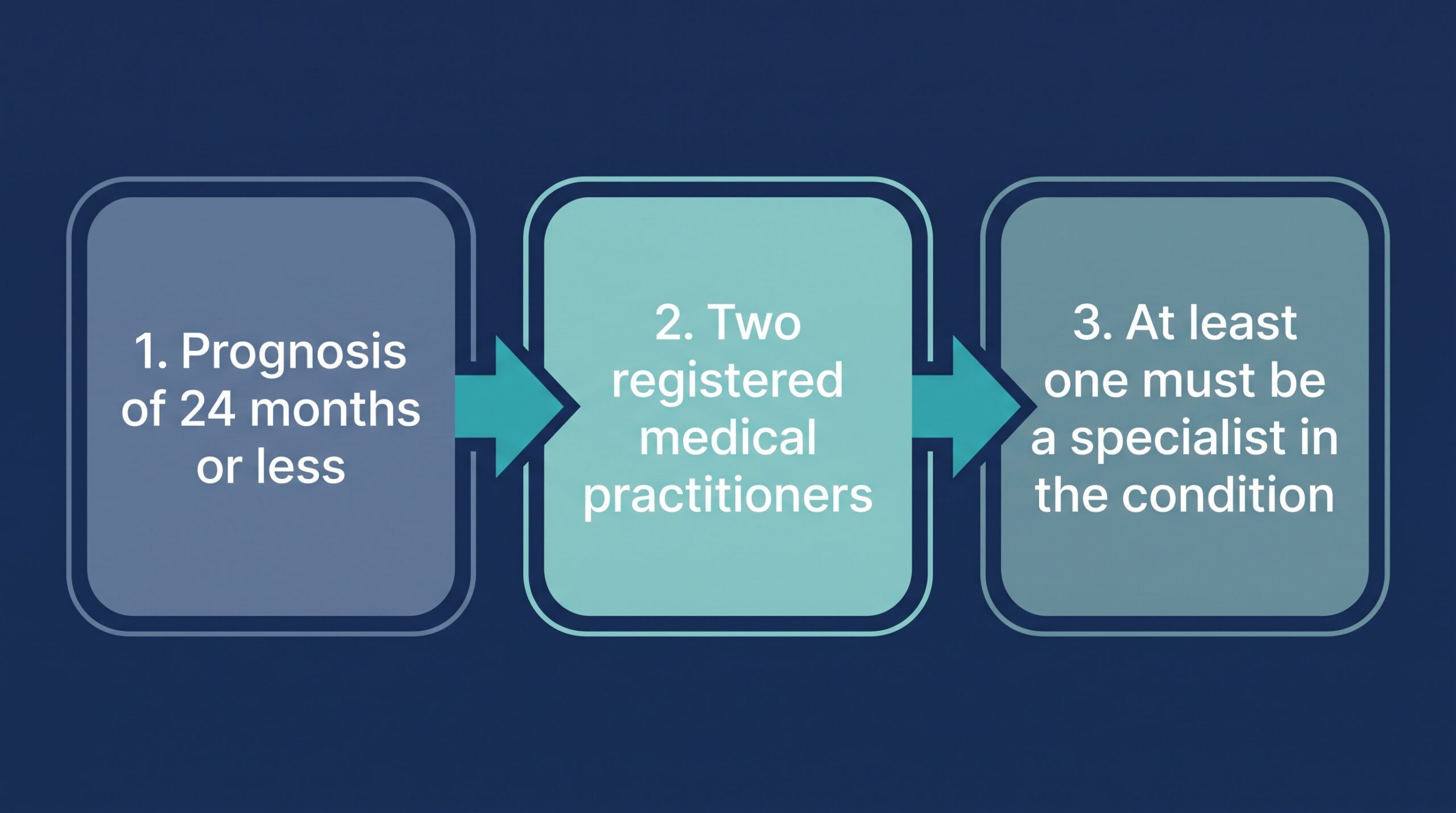
In the past, many Australian policies required a doctor to certify that a patient had 12 months or less to live. This caused immense stress for families. Thankfully, under updated superannuation guidelines set by the Australian Prudential Regulation Authority (APRA) a few years ago, the certification period was extended. Today, your doctors generally need to confirm a prognosis of 24 months or less.
To get a claim successfully approved, you normally need to meet a few strict medical steps:
- Two Independent Doctors: Two registered medical professionals need to officially confirm in writing that your condition is likely to result in passing within a 24-month window.
- The Specialist Requirement: At least one of those certifying doctors must be a specialist practising in the exact field of your illness. For example, if you are claiming for advanced cancer, an oncologist must provide one of the certifications. A general practitioner alone is not enough.
- Policy Specifics and Superannuation Rules: While 24 months is the norm for policies held inside superannuation, some older policies or standalone covers held outside of super might still carry a tighter 12-month rule. It is always worth double-checking your specific product disclosure statement or calling your adviser to clarify.
How Terminal Illness Interacts With Trauma and TPD
When a major health crisis hits, it is common for people to wonder which part of their insurance they should claim on first. This is especially true for Australians who hold a combination of Life, TPD, and Trauma insurance.
Trauma cover is designed to pay out upon the diagnosis of a specific critical illness, like a heart attack, stroke, or early-stage cancer. It is money meant to help you survive and recover. If your condition worsens to the point where you can never return to work, you might then look at a TPD claim. You can read more about what conditions qualify for a TPD payout in Australia to see how that fits into the picture.
Terminal illness sits at the end of this spectrum. Because these covers are often linked, claiming on Trauma or TPD earlier in your health journey will reduce the final amount available for a terminal illness or death benefit claim. Understanding this linkage is why having a clear strategy is so important.
For instance, many professionals use a split TPD insurance strategy to structure their premiums effectively, but the fundamental rule remains: money pulled from a linked policy today reduces the balance available tomorrow.
Retail Policies vs Group Insurance in Superannuation
Where you hold your policy can change how a terminal illness claim is handled.
Millions of Australians hold default life insurance through their industry or retail superannuation fund. This is known as group insurance. Group policies are great for basic cover, but they often have rigid definitions and can sometimes take longer to process because the super fund trustee must approve the release of the money on top of the insurer approving the claim.
On the other hand, retail life insurance is cover you apply for directly through a financial adviser or broker. These policies are tailored specifically to your health and lifestyle at the time of application. Retail policies often feature more generous definitions and a more direct claims process, which can be a massive relief when time is of the essence. If you are unsure which type you have, our breakdown on retail or group life insurance explains the differences in detail.
Additionally, the premium structure you chose years ago will dictate your ongoing costs if you are dealing with a long-term illness before hitting the terminal stage. Those on stepped premiums will see their costs rise every year as they age, while those who locked in level premiums early on will enjoy much more stable costs. We cover this dynamic deeply in our guide to stepped vs level life insurance premiums.
The Mechanics of the Payout
Insurance companies are acutely aware that time is precious in these scenarios. Once a terminal illness claim is lodged, it is usually red-flagged for priority processing. Once you hand in the correct medical forms and specialist reports, things are often sorted out in a matter of weeks, rather than the months a complex TPD claim might take.
Here is what to expect when the money is finally released:
Payment Structure
The vast majority of the time, the money lands in your nominated bank account as a single, large lump sum. Some specific policies may allow you to choose instalment payments or an ongoing income stream instead. It really comes down to what makes you and your family most comfortable, and how you want to manage the cash flow.
The Tax Implications
If your life insurance lives inside your superannuation fund, the rules work heavily in your favour during a terminal illness. Under Australian tax law, if you meet the terminal medical condition for release, you can usually take your terminal illness insurance benefit as a completely tax-free lump sum. Better yet, this condition also unlocks your actual accumulated superannuation account balance entirely tax-free.
What Happens if You Outlive the Prognosis?
This is one of the most common and emotionally complex questions people ask. Medical science is advancing rapidly, and sometimes people outlive their 24-month prognosis. If you receive a terminal illness payout and then experience a miraculous recovery, or simply live well beyond the doctors’ expectations, you do not have to pay the money back.
The claim was assessed and approved based on the best medical evidence available at the time. The money remains yours. However, because your policy was fully paid out, you will no longer have life insurance cover, and getting new cover after a major health event will be incredibly difficult, if not impossible.
What Can You Actually Spend the Money On?
Unlike some government grants or highly specific insurance types, there are absolutely no rules on how you use a terminal illness payout. You do not have to submit receipts to the insurer. It is your money to use however you see fit.
Over the years, we have seen families use these funds in incredibly practical, selfless, and touching ways. Some of the most common applications include:
- Medical and Palliative Costs: Funding private specialist treatments, experimental non-PBS medications, full-time home nursing, or comfortable palliative support without draining the family savings account.
- Clearing the Family Debt: Paying off the family home mortgage outright. For many parents, knowing their partner and children will have a secure roof over their heads forever provides immense peace of mind.
- Replacing Income: A massive cash injection allows you to stop working immediately. It also allows your partner to quit their job or take extended unpaid leave to become your full-time carer and just be present.
- Modifying the Home: Paying for wheelchair ramps, bathroom modifications, or hospital beds to make living at home safe and comfortable.
- Making Memories: Funding a final family holiday, paying for relatives to fly out from overseas, or ticking off a major bucket list goal while you still feel physically capable.
If you are currently healthy and trying to figure out if your current level of cover would actually stretch far enough to handle the mortgage and medical bills, using a resource like our guide on how much life insurance you need is a smart way to stress-test your current numbers.
A Realistic Scenario: The Tradie and the Mortgage
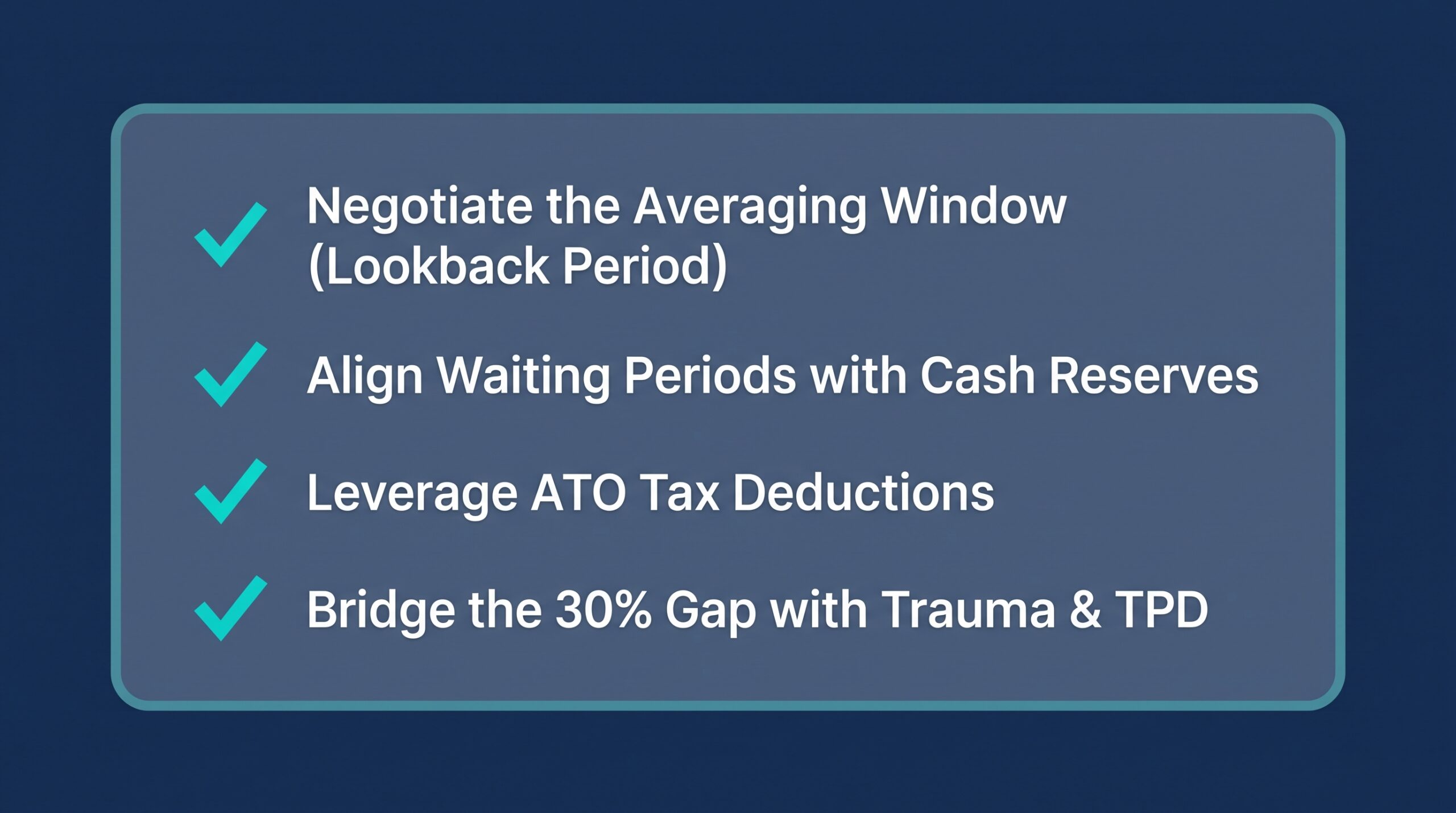
To put this into perspective, imagine a 48-year-old carpenter who has spent his life building a business and supporting a wife and two teenagers. We know that tradespeople carry unique physical risks, which is why income protection for tradies and access to resources like the Tradie Group Hub are so popular.
But if this carpenter is diagnosed with advanced, untreatable motor neurone disease, income protection will only replace a portion of his monthly wage. It will not clear his $600,000 mortgage, and it will not pay for the massive home modifications he will soon need.
By activating the terminal illness benefit on his $1 million life insurance policy, he receives a lump sum that immediately wipes out the mortgage. He uses $100,000 to adapt his bathroom and living space, sets aside cash for his kids’ future education, and uses the rest to ensure his wife doesn’t have to worry about grocery bills while she cares for him. He gets to spend his final months focusing entirely on his family, completely free from the terror of leaving them in debt.
Do You Actually Have to Claim It?
Not at all. You are never forced to claim a terminal illness benefit. It is merely an option sitting on the table.
If you already feel financially secure, perhaps because you own your home outright and have substantial savings, you might prefer to leave the policy untouched. If you do not make a claim, the full standard death benefit will simply pass directly to your nominated beneficiaries or your estate after you pass away, exactly as originally intended.
Steps to Make a Claim Without the Stress
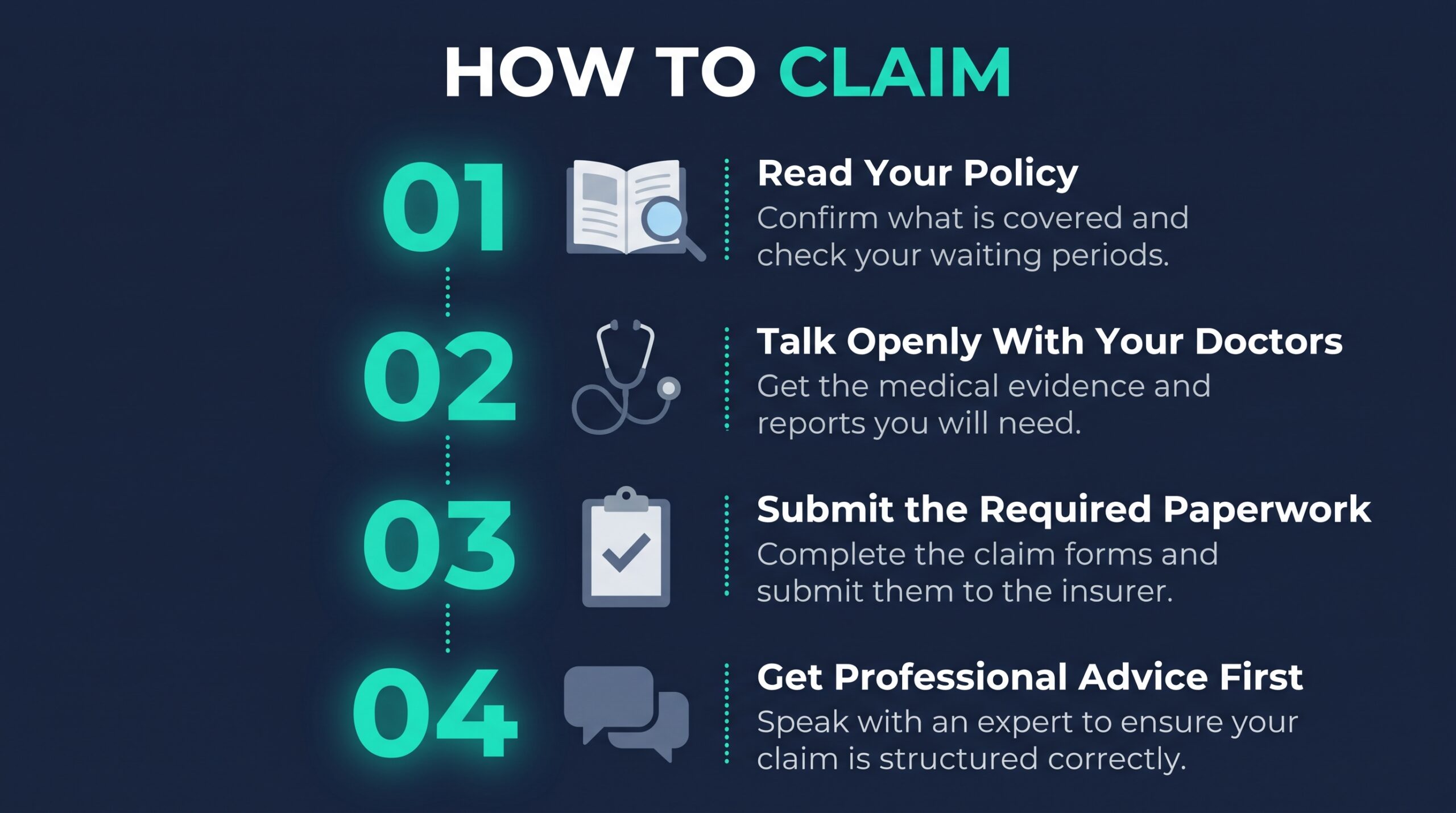
When your family is dealing with devastating health news, filling out a stack of insurance forms is the absolute last thing you want to be doing. But taking a few methodical steps early on can lift a massive weight off everyone’s shoulders.
- Read and Understand Your Policy: Your first step is to call your insurer or log into your superannuation portal. Find out exactly how much death cover you have, what the current balance is, and ask them to send you the specific terminal illness definition and claim forms.
- Talk Openly With Your Doctors: Book a long appointment with your primary treating doctor and your specialist. Explain that you need to apply for a terminal illness benefit and ask if they are comfortable providing the written statements detailing your diagnosis and the 24-month prognosis.
- Submit the Required Paperwork: Fill out the claim forms. This usually consists of a Member’s Statement (completed by you) and separate Doctor’s Statements (completed by your medical team). If you are claiming through a super fund, you may also need to provide certified ID and bank details.
- Get Professional Advice First: A large cash injection can sometimes have unintended consequences, such as cutting off your access to certain Centrelink benefits or government healthcare cards, depending on how the money is spent or invested. Having a quick chat with a trusted financial advisor or reaching out to our team on 1300 793 143 or via our contact page ensures you do not get caught out by surprise rules.
A terminal diagnosis turns your entire world upside down in a single afternoon. But knowing how to unlock your life insurance early means you can take back a small piece of control. It buys you the ultimate luxury in a terrible situation: the space to step away from work, pay the bills, and just focus entirely on the people you love.
Unsure How Your Current Policy Would Respond?
Navigating life insurance definitions during a health crisis shouldn’t be a burden. Let our specialists review your current cover, explain your options, and help you structure a policy that provides absolute certainty for your family.
Free, no-obligation policy reviews for Australians.